
Hey Beginner Flower Gardener!
Planting Zones and Frost Dates
Are you confused because you see everyone talking about “first frost dates” or “last frost dates”? Maybe you’re bewildered. What does that mean???? But you’re afraid to ask?
Then they start talking about “planting zones”
and you feel like quitting before you started?
I got you, sis.
Frost Dates
🥶 Understanding your “last frost date” will help you decide when it is safe to plant your flowers outside and to understand some gardening jargon. Every area of the country has a prediction, based on history, of when your last frost will occur. Many of your spring flowers can handle a light frost. Other flowers shouldn’t be planted outside until after your last frost. You will be advised to start certain seedlings a designated amount of weeks before your last frost, or plant seeds directly after your last frost.
🥶 So, when is your last frost? That depends on where you live, of course. If you aren’t sure, you can follow this link and add your zip code to find out. Keep in mind, my last frost date is April 15th, but I generally wait another week or so to plant because it seems we always have one more frost after the date given. If you plant your flowers and another frost comes, just cover your newly planted flowers with a bed sheet or frost cloth the night before the frost falls to protect them.
🥶 Your “first frost date” will be the first frost after summer and fall. Many flowers bloom until “first frost.”
Tap the link below, enter your zip code, and find your personal first and last frost dates.
U.S.D.A Planting Zones
Step one to gardening is knowing which U.S.D.A planting zone you are in. You can find this information on U.S.D.A.’s website. There is a map of all the zones plus a place where you can input your zip code. it will then show you the zone you are in.
🌿 If you are in the U.S., It’s important to know which planting zone you are in before you start planning or planting in your garden. The U.S.D.A. has organized the entire country into planting zones based on how cold it gets in each area. Zone 1 is the coldest area. Zone 10 is the warmest. Certain plants can survive in colder temperatures better than others. Others can’t take the heat. Each plant is classified in a zone range. This information is usually included on the tag.
🌿 Keep in mind that flowers and plants are zoned as “hardy” in their zoned areas. This means they are perennials in those zones. They will keep coming back year after year in those zones. However, you can plant these flowers and shrubs in other zones, but only as annuals where they will survive one year.
🌿 For example, I plant lantana every May because it blooms beautifully from early summer to late fall when the first big frost drops. Lantana is labeled as zone 8-11. It is hardy in zones 8-11, meaning lantana comes back year after year in those warmer zones. In zone 7, where I live, it might come back if I mulch it well and our temps don’t drop too low over the winter but honestly, it has never come back for me. Our winters always end up killing it. I always have to replant - which means it is an annual for me. If I lived in much warmer Florida in zone 9, it would be a perennial. So even though lantana is labeled as Zone 8-10, I know that I can plant it as an annual where I live in Zone 7. (Some newer varieties are zoned as perennials in zone 7, but it has never worked for me...so far.)
🌿 You will increase your chance of success in your garden if you only plant trees, shrubs, and flowers within your U.S.D.A. zone, or if you plant those outside of your zone with the understanding they are annuals for you.
If those tips helped, you will find even more in my Hey Beginner! Garden Guides

Welcome spring into your cottage garden with our improved Spring Garden Guide! Based on your feedback from our fall guide, we've created an even better resource specifically for cottage flower gardeners. This ebook answers all your spring gardening questions, from what to plant and when to plant, to expert tips on how to plant for a thriving cottage garden. Designed as a practical resource, the interactive table of contents allows you to quickly find the information you need, from specific flower suggestions to general spring planting advice.

Welcome to my Beginners’ Fall Gardening Guide! I’ve received a ton of messages and comments asking me for help with your fall garden overall and for suggestions of fall flowers. This whole ebook (digital download) is an answer to all those questions. Consider it more of a resource than a book to read from cover to cover. If you go to the table of contents, you’ll find links to all the sections and subsections as well to each flower and plant. I wanted to make it easy for you to refer back to this fall guide year after year so that the information is as helpful to you as possible. You can also print it off and add it to a 3-ring binder if that would easier for you.
The guide includes:
A section on fall gardening 101 to answer all your basic fall gardening questions
30 fall flowers
Factual info on each flower including my own experience and opinion on each one
Pictures of each flower
All written as if we were sitting on the back deck with some hot chocolate talking about flowers.
I hope you love it as much as I did my first book about flowers. I was obsessed!
Here to your new found flower love (obsession) !!! 💛 💛
53 pages
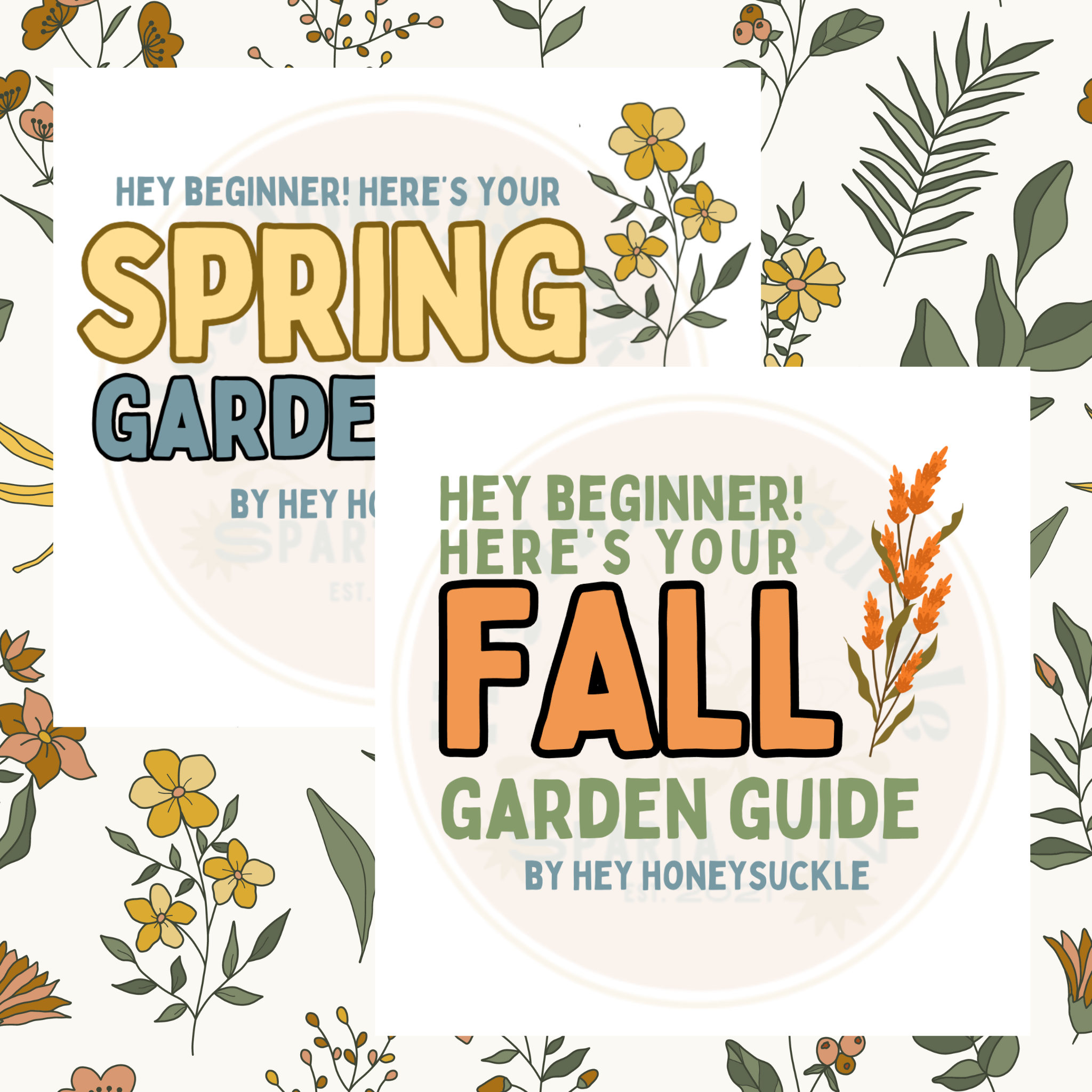
For a limited time, purchase BOTH the spring and fall garden guides at a discounted price!
The bundle is 141 pages of a digital download that you can choose to print or to access digitally while utilizing the built in links!